Quick Hits
Daily brief research updates from the cognitive sciences
Social mingling of mice can be controlled by zapping certain brain regions
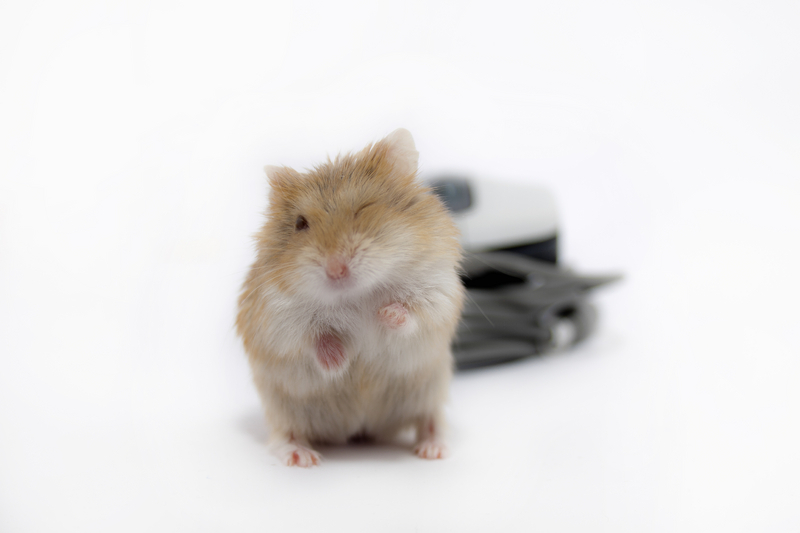
There has been plenty of research into brain areas that contribute to our social brain but these researchers around Stephen Mague at Duke University went a step, or two, further and managed to identify a network that controls social mingling in mice. What’s more they could then manipulate the network to make the mice more, or less, gregarious.
First off, the researchers identified eight regions that are known to be involved in social aspects of behaviour. They then made recordings from these areas in social scenarios. The multiple readings from these areas (which are immense amounts of data in themselves) were then fed into an AI tool that then tried to identify patterns in this complex set of data.
The AI tool, after going through its learning, could then accurately predict which mice would be more social or not from their activation patterns in this network. This shows that the social brain is a network rather than a region.
However, the more fascinating part of this study is that the researchers were than able to manipulate how social these mice were by activating different areas of the network through a technique called optogenetics, zapping and activating parts of this network with laser light and thereby making the mice more, or less, gregarious.
This highlights that the brain operates in networks rather than specific modules or regions and this also opens the path to more refined work in the future focusing on networks and using AI to identify neural patterns.

Andy Habermacher
Andy is author of leading brains Review, Neuroleadership, and multiple other books. He has been intensively involved in writing and research into neuroleadership and is considered one of Europe’s leading experts. He is also a well-known public speaker speaking on the brain and human behaviour.
Andy is also a masters athlete (middle distance running) and competes regularly at international competitions (and holds a few national records in his age category).
Reference
Stephen D. Mague, Austin Talbot, Cameron Blount, Kathryn K. Walder-Christensen, Lara J. Duffney, Elise Adamson, Alexandra L. Bey, Nkemdilim Ndubuizu, Gwenaëlle E. Thomas, Dalton N. Hughes, Yael Grossman, Rainbo Hultman, Saurabh Sinha, Alexandra M. Fink, Neil M. Gallagher, Rachel L. Fisher, Yong-Hui Jiang, David E. Carlson, Kafui Dzirasa.
Brain-wide electrical dynamics encode individual appetitive social behavior.
Neuron, 2022; DOI: 10.1016/j.neuron.2022.02.016
More Quick Hits

Breastfeeding Improves Mother’s Cognitive Abilities — Years Later
Quick HitsDaily brief research updates from the cognitive sciences o are you saying that breast feeding is not only good for the infant but also the mother?!Yes, we’ve know for a long, long time that breastfeeding is very good for the infant. Over...

Mothers Can Pass on Stress to Future Generations
Quick HitsDaily brief research updates from the cognitive sciences presume you’re not just talking about stressed mothers stressing out their kids and/or grandchildren?Not precisely. I’m talking about passing on stress activation patterns in DNA...

Learning Before Age Five Can be Seen in the Brain Forty Years Later
Quick HitsDaily brief research updates from the cognitive sciences ducation before age five leaves structural changes to the brain, identifiable forty years later — impressive! This is the beauty of long-term longitudinal studies (the negative side...

Exercise in Childhood Predicts Healthy Brains (into Adulthood)
Quick HitsDaily brief research updates from the cognitive sciences k, we all know by now that exercise is good for you. Many of you may also be more than aware that exercise is a potent stimulator for the brain encouraging brain growth and...

The Surprising Truth of Why Powerful People can be Toxic
Quick HitsDaily brief research updates from the cognitive sciences e’ve all heard the stories of toxic bosses, and powerful people who happily destroy other people’s lives, and show no compassion to those less fortunate than themselves. There is a...

Leadership Behaviours for More Resilient and Effective Teams
Quick HitsDaily brief research updates from the cognitive sciences hat makes for effective and resilient teams is something that interests many leaders and organisations. I have spoken about some of these aspects in other articles, particularly...